Why HEADTURNED
Progress should not hide its consequences.
HEADTURNED grew from a question: does progress remain progress when its benefits depend upon serious consequences being transferred somewhere else?
The purpose is not to oppose human ingenuity. It is to understand what our systems make possible, what they ask of the world around them and how they might be built better.
The question
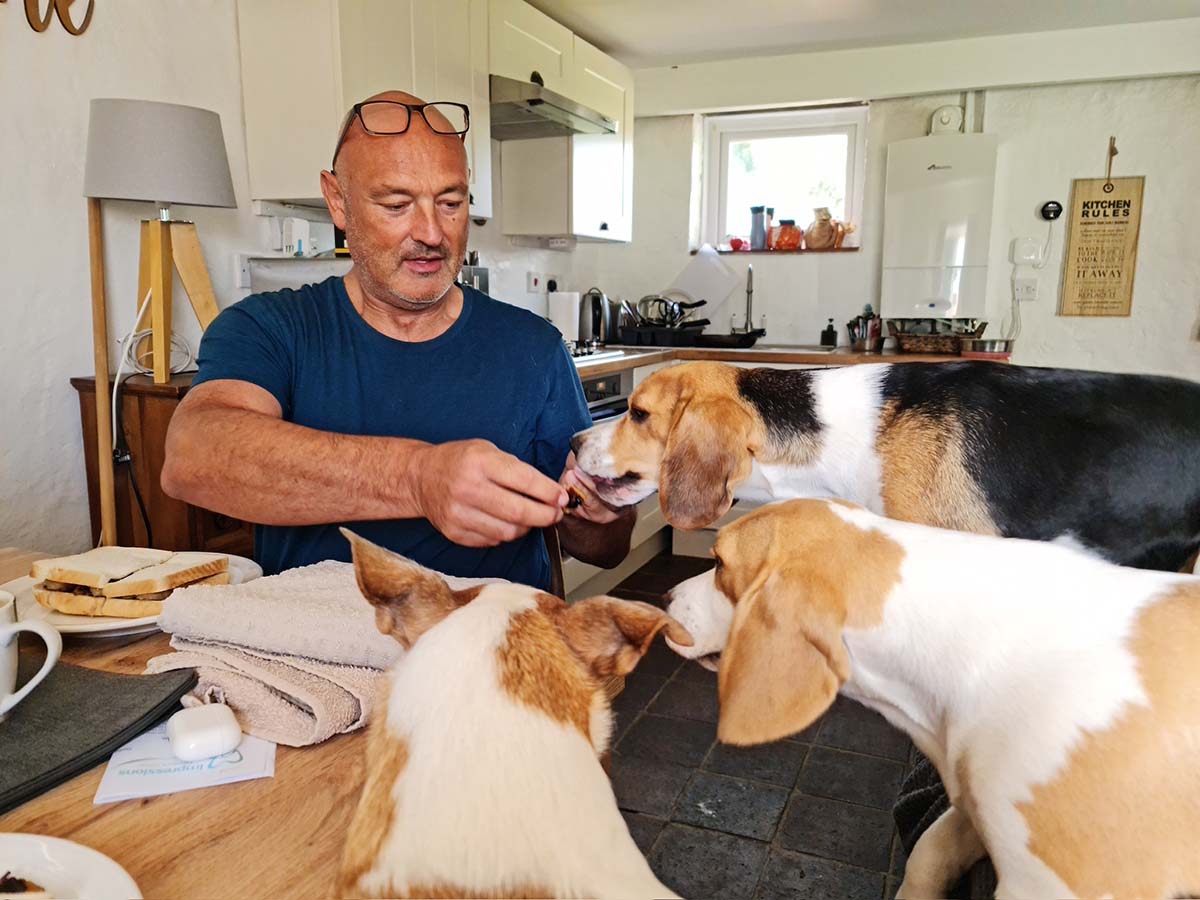
A founding perspective from Adam Whittaker, Founder of HEADTURNED.
“I did not begin with answers. I kept returning to the same question: is progress still progress when its consequences have simply been moved somewhere less visible? For me, questioning should lead to understanding—and, where the evidence justifies it, to building something better.”
Capability creates responsibility.
Human beings have become extraordinarily capable of reshaping the conditions around us. We manufacture at immense scale, move food and materials across continents and alter landscapes in ways earlier generations could not have imagined.
That capability has improved lives, but it can also place the effects of a decision far from the person who benefits: in another community, species, ecosystem or generation. A more demanding idea of progress should improve human life while protecting—and where possible restoring—the living systems that make it possible.
If we are capable of changing the natural world at extraordinary scale, we should also become capable of understanding those changes and changing course when the evidence requires it.
Convenience and consequence
Immediate benefit is only part of the story.
Convenience is not inherently wrong. Reliable food, useful technology, modern medicine, transport, infrastructure and productive industry matter. The question is whether the ease at the point of use reflects the full cost of the system that created it.
A product may be simple to buy while its material, energy and waste costs remain invisible. Food may arrive without revealing the land, water, labour, animal systems or ecological relationships behind it. Something discarded may leave one person’s view while remaining in soils, rivers or oceans for generations.
Understanding is more useful than choosing a convenient villain. Complete accounting asks what happens before, during and after the moment of convenience: who benefits, what is consumed, where the effects appear, what the evidence establishes and which better choices could become viable. Responsible judgement must examine trade-offs, scale, place and time.
Interconnected systems
Humanity does not operate outside the living world.
Human health, food, water, animals, soils, biodiversity, knowledge, communities and economies are parts of systems that continuously affect one another.

The breadth of the response follows the shape of the problem.
Wildlife depends upon habitat. Habitat depends upon viable land and water systems. Food production depends upon soils, biodiversity, energy, knowledge and people. Evidence has little public value when it cannot be understood, and practical work cannot continue without the capability to sustain it.
No single discipline or institution sees the whole picture. Scientists, engineers, farmers, veterinarians, educators, creators, communities and people with lived experience may each understand a different part of the same system. HEADTURNED is conceived as an ecosystem so those perspectives, and the capabilities they inform, can work together without erasing their differences.
Evidence before ideology
Understanding must come before certainty.
HEADTURNED should ask difficult questions without deciding the answer in advance. Established evidence, emerging evidence, reasonable hypotheses, uncertainty and opinion must not be treated as interchangeable.
That discipline applies inward too. Credibility depends upon being willing to test our own assumptions, acknowledge what we do not know and change direction when stronger evidence emerges. Investigation may challenge an accepted practice or confirm that it withstands scrutiny. The conclusion should follow the evidence.
01
Observe
Begin with what is happening, not with the conclusion we expect to reach.
02
Understand
Connect evidence, experience and knowledge across disciplines before defining the problem.
03
Question
Test accepted practice, emerging ideas and our own assumptions with equal seriousness.
04
Build and measure
Develop practical alternatives, examine their effects and share what the work teaches us.
Build the better alternative
Criticism is not a substitute for a viable choice.
When a system produces avoidable harm, it is not enough to ask people to choose differently while leaving the conditions around them unchanged. A constructive response asks what the current system achieves and what a better alternative must do.
That may require research, experimentation, technology, engineering or different economics. It may also reveal that an accepted practice remains the best available option. The answer should follow the work.
HEADTURNED is designed to connect understanding with action: investigating problems, testing alternatives, applying what works and sharing what the work reveals. The ingenuity that built today’s systems can also improve them.
Build the strength to act
Long-term responsibility requires more than intention.
Serious work needs people, expertise, infrastructure, time and resilience. HEADTURNED therefore intends to build useful commercial capabilities that can give its wider purpose greater freedom and endurance.
HEADTURNED STUDIO is the first major expression of that choice. If it succeeds by creating genuine value for creators and audiences, its commercial strength can make the wider organisation more capable. The full model is explained on the Economic Model page.
Built to continue
The purpose should outlive the people who began it.
Some responsibilities cannot be completed within a quarter, a funding cycle or even a lifetime. Habitats recover, knowledge accumulates and expertise passes to those who follow.
HEADTURNED began with a founder’s conviction, but it should not remain dependent upon one person. Its principles, evidence, memory, resilience and culture should carry useful work forward across generations.
The meaningful legacy would be an organisation able to question itself, preserve what it learns and become more useful with time. The task is not to appear complete within one lifetime, but to leave stronger principles, clearer evidence and better choices for those who inherit the work.