
End Agricultural Animal Cruelty
Hounds of the Hunt: The Hidden Victims of Fox Hunting
Behind the red coats, horns, and countryside spectacle of fox hunting lies a quiet truth: the hounds suffer too. Bred in volume, raised in kennels, and discarded when they slow down or don’t “make the grade”, hunting hounds live and die inside a closed system that most people never see. This article lifts the gate on that world — exposing how hounds are bred, kept, and killed, and how the HEADTURNED Foundation plans to help build a future where working dogs are treated with dignity, not disposed of in the shadows.
End Agricultural Animal Cruelty
The Hidden Victims of the Hunt
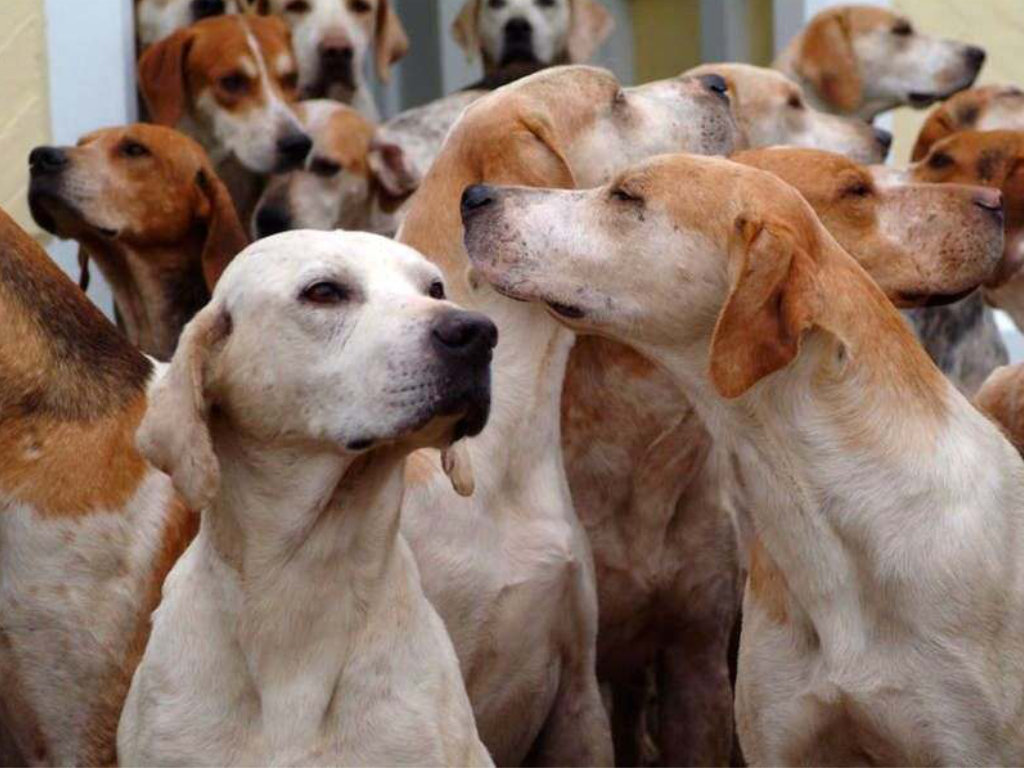
When people think of fox hunting, they picture the fox. Yet another animal lives and dies inside this tradition: the hunting hound. These dogs are bred, trained, and disposed of within a system that rarely sees daylight. They are not companions. They are tools, and when their usefulness ends, so often does their life.
This article focuses on those hounds. On who breeds them, how they are kept, the brutality of their working life and “retirement”, and how the HEADTURNED Foundation’s Sanctuary, Innovation Hub, and conservation work will help build a different future, one where working dogs are treated with dignity, not discarded in the shadows.
Working Dogs, Not Companions
Bred for the Hunt, Not for a Home
Most hunting hounds are purpose-bred by the hunts themselves or by closely associated kennels and estates. Commonly used breeds include English Foxhounds, Harriers, and other scent-hound lines selected for stamina, pack drive, toughness, and an intense fixation on fox scent. These are intelligent, sensitive dogs whose natural instincts are harnessed, hardened, and redirected.
Puppies are assessed early. Those who are shy, gentle, or slower to learn may be labelled as “unsuitable”. In many traditional setups, these dogs do not get a second chance. They are not advertised for adoption or offered to loving homes, they are quietly culled. The breeding system is built around throughput: litters in, working hounds out, surplus life removed.
This is not responsible working-dog breeding. Ethical breeding starts with a plan for every single animal born, including retirement and rehoming. The hunting hound world has largely operated under a different logic: if a dog cannot or can no longer serve the hunt, their story ends there.
Out of Sight, Out of Mind
Living Conditions: Pack, Concrete, and Control
Conditions for hunting hounds vary between hunts, but one pattern is consistent: these dogs are rarely treated as individual beings. They live in large packs, often in concrete or partially covered runs, with minimal enrichment and limited one-to-one care. Their environment is designed for control and output, not for emotional wellbeing.
Kennels can be noisy, stressful places. Dogs jostle for hierarchy, food, and attention. Injuries from pack fights, untreated joint problems, and chronic stress behaviours are not uncommon where welfare oversight is weak. Veterinary care may be limited by cost, culture, or simply by the idea that the pack, not the individual, is the priority.
Because these dogs are seen as “working animals”, there is a dangerous assumption that their emotional needs matter less. In reality, hounds feel fear, confusion, loneliness, and pain just as acutely as any family dog. They simply live in a system that doesn’t acknowledge it.
Conditioned to Pursue
From Puppy to Pursuer: How Hounds Are Shaped
From an early age, hounds are exposed to scents, sounds, and pack dynamics that condition them for the chase. They are taught to follow fox scent relentlessly, to ignore distraction, and to move as a single hunting unit. Obedience is not about trust and collaboration, it is about unquestioning drive.
Some training practices may involve controlled exposure to wildlife scent, drag lines, or staged scenarios where hounds are praised for intensity and aggression. Dogs that question, hesitate, or struggle to keep up risk being marked as “unsuitable”. In a culture where the hunt is everything, softness becomes a liability.
The chase itself is traumatic for both fox and hound. Hounds are pushed to exhaustion, sometimes through harsh terrain and dangerous conditions. Injuries in the field can be severe. In the worst cases, hounds are lost, struck by vehicles, or left hurt and unaccounted for, collateral damage in the pursuit of tradition.
Used, Then Disposed Of
A Short Working Life and a Violent End
A typical working life for a hunting hound is short. Once a dog slows down, becomes injured, develops health issues, or simply no longer fits the pack’s performance needs, they are considered “finished”. In an ethical system, this would be the point where retirement, rehoming, and long-term care begin. In the hunting world, it is too often the point where life ends.
Many hunts destroy older or unwanted hounds on-site, commonly by firearm. Disturbingly, this can take place within sight, sound, or smell of the remaining dogs. Puppies deemed surplus or “unsuitable” may be killed at only a few weeks old. These deaths are not part of public spectacle; they are carried out quietly, behind fences and closed doors.
This is not humane end-of-life decision-making guided by veterinary advice and compassion. It is a business decision baked into the model. Dogs are created, used, and destroyed to service a practice that has already been rejected in law and in public conscience.
Behind Closed Gates
Law, Loopholes, and the Culture of Silence
Officially, many hunts now claim to operate as trail hunts, following an artificial scent rather than a live fox. Yet investigations and field evidence continue to show foxes being chased and killed, and hounds being bred and destroyed to sustain that reality. Oversight of kennel practices, breeding volumes, and end-of-life decisions is thin or non-existent.
There is also a powerful culture of silence. Staff, volunteers, and local communities may feel unable to speak out, either through fear of social exclusion, economic pressure, or loyalty to “tradition”. Working hounds become invisible. Their suffering is normalised because “that’s how it’s always been done”.
Changing this means more than just enforcing existing hunting bans. It requires recognising working dog welfare as a serious, stand-alone issue, one that deserves scrutiny, regulation, and reform in its own right.
Sanctuary, Innovation, and Reform
How the HEADTURNED Foundation Will Help the Hounds
The HEADTURNED Foundation is not only challenging cruelty, it is building the structures needed to replace it. Through the Sanctuary, the Innovation Hub, and dedicated conservation work, we are designing a future where working animals, including hunting hounds, can live with dignity and genuine care.
At the heart of this vision is the Sanctuary: a landscape for rescue, rehabilitation, and long-term care. Here, ex-working dogs, including former hunting hounds, can be assessed by behaviourists, treated by veterinary teams, and slowly introduced to quieter, more stable lives. Some will be rehomed. Others will remain in supported sanctuary environments tailored to their needs.
The Innovation Hub will work alongside veterinary organisations, universities, and welfare groups to:
- Develop better behavioural rehabilitation protocols for ex-hunting hounds who have lived only in packs.
- Support veterinary treatment funds for working dogs, ensuring injury or illness does not become a death sentence.
- Collect data and evidence to inform stronger welfare standards for breeding, kennelling, and end-of-life decisions.
- Create training pathways through the Learning & Careers work, supporting veterinary nurses, behaviourists, and animal care professionals specialising in rescue and rehabilitation.
The goal is simple: to make the old ways indefensible, both morally and practically, by showing that there is a better way, and by building it in full view of the world.
From Witness to Action
Giving Hounds the Future They Deserve
The story of hunting hounds is not just about cruelty, it is about how easily lives are hidden when they are reduced to tools. These dogs ask for so little: safety, care, a chance to rest by someone's side instead of dying behind a kennel gate.
The HEADTURNED Foundation is committed to exposing this reality and offering a different template. A world where Sanctuary landscapes, Innovation Hub research, and strong veterinary partnerships come together to protect animals who have given everything and been given nothing in return.
You can help by supporting rescue organisations, challenging cruelty where you see it, and backing legislation that protects working dogs as fully as pets. Share these stories. Question traditions that demand suffering. Stand with the animals whose voices cannot carry beyond the kennel walls.
What we do next can change everything, for the fox, for the hound, and for every creature caught in systems that must finally end.
Share this page
Help us spread the word about HEADTURNED and the work we're building.